One way to resist taxes — or to resist the sort of property seizure that governments sometimes inflict on tax resisters — is to hide assets so as to remove them from the reach of the tax collector or assessor. Here are a few examples:
- Charles Merrill, who resisted his taxes as a way of protesting for the legal recognition of same-sex marriage in the United States, had an appropriately flamboyant asset-hiding strategy. “I have buried $2 million worth of gold coins in the desert…” he said. “My partner doesn’t even know where it is at. If the IRS allows me to file a joint federal income tax form like any other married couple, the money is there to pay.”
- Lately, wealthy Italians have taken to avoiding the prying eye of the revenue agent by parking their yachts in foreign Mediterranean ports. As of earlier , some 30,000 berths had gone empty in Italian ports, which not only foiled the tax collector but “cost the Italian economy some $350 million in lost revenues from marina fees and services, and fuel sales.”
- When Doukhobor refugees in Canada refused to pay school taxes on their farmland, reasoning that since they refused to send their children to wicked Canadian schools, they shouldn’t have to pay for them, they anticipated that the government might resort to seizure and “very thoughtfully lost no time in taking their crops from the land within the Langham school district.”
- Another, more drastic way of keeping the tax collector from your door is to demolish your house. Michigan factory worker Edward Koryto did that in to a home he had spent seven years building from scrap lumber when the tax assessors nearly tripled its assessed value, which raised the property taxes due on it by 150%.
- I covered the strategy of holding resisters’ property in someone else’s name.
- Later in this series, I’ll also cover taxpatriatism and mass-migration as a way of fleeing the tax collector, which is a similar strategy, and barricades as a means of keeping assets safe from the tax collector, which is another.
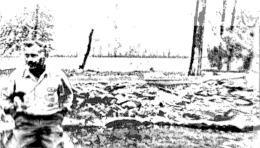
Edward Koryto standing in the rubble that used to be his home